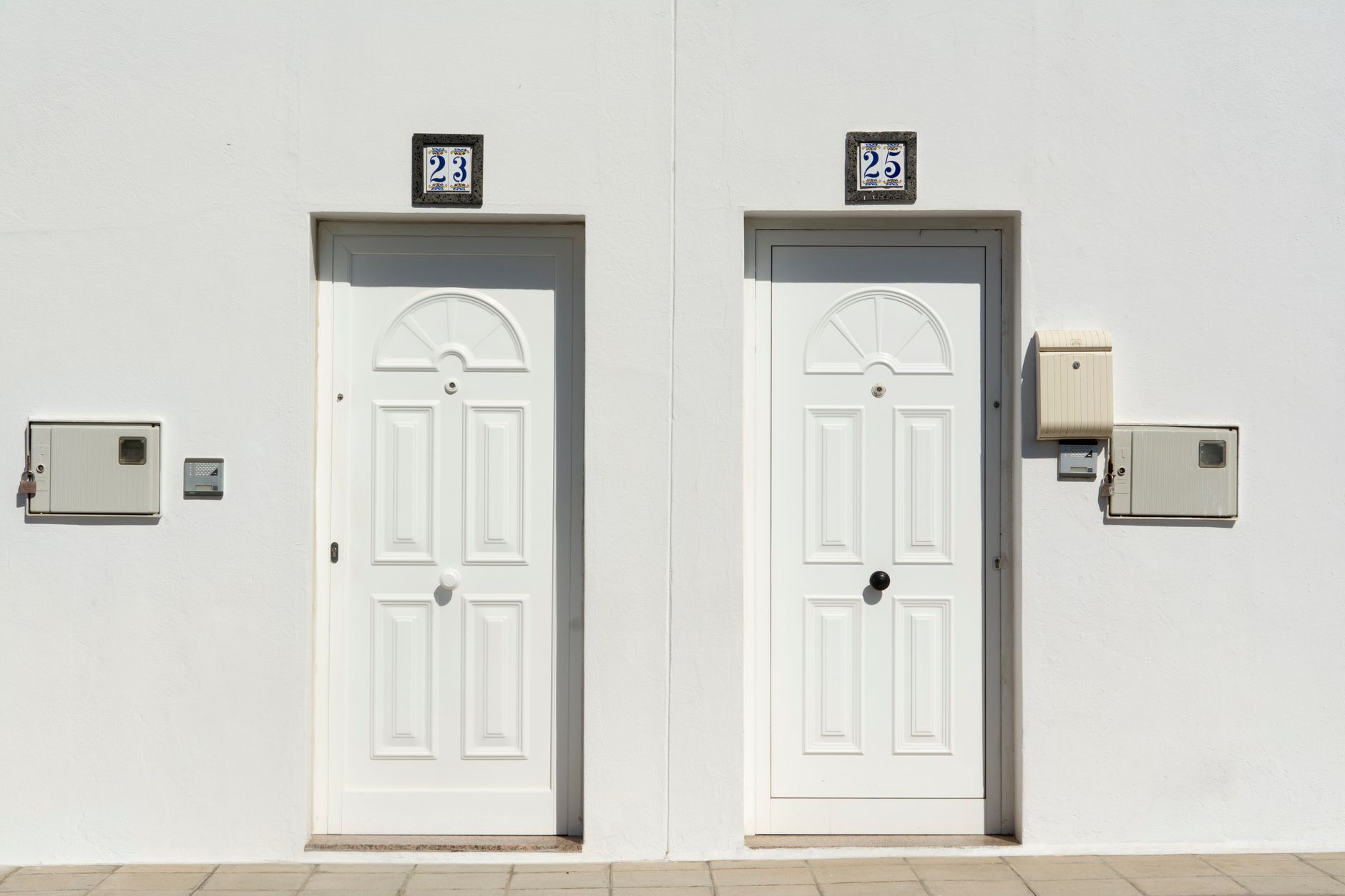
Your apartment door is one of the biggest weak points for noise. A hollow-core door with gaps around the frame can let in as much sound as an open window. The good news: you can dramatically reduce door noise without a single drill hole.
Why Apartment Doors Leak So Much Sound
Most apartment doors are hollow-core, which means the interior is filled with cardboard honeycomb rather than solid wood. Hollow doors provide almost no sound isolation on their own. Add the gaps at the bottom, sides, and top of the frame, and you have a near-open path for sound to travel through.
The key principle here is mass plus sealing. More mass slows sound. Sealed gaps stop sound from traveling the easy route around the door entirely.
Step 1 — Seal the Gaps First
Before adding any mass, seal every gap around your door. This single step often produces the most noticeable improvement.
- Door sweep: Attach a self-adhesive door sweep to the bottom of the door. Choose a rubber or silicone sweep that makes firm contact with the floor. This closes the gap that is responsible for a large portion of noise leakage.
- Foam weatherstripping tape: Apply this around the door frame on all three sides. It compresses when the door closes and seals the small gaps between the door and the frame. No drilling required — the tape is self-adhesive.
- Acoustic door seal kits: These are pre-made kits that include automatic door bottoms and perimeter seals. They are more expensive but provide a professional result.
Step 2 — Add Mass to the Door Surface
Once the gaps are sealed, adding mass to the door itself reduces how much sound passes through the panel.
- Moving blankets: Heavy moving blankets hung over the door using over-door hooks add significant mass with zero damage to walls or door. They are not pretty, but they work well for bedrooms where appearance is less important.
- Mass Loaded Vinyl (MLV): MLV is a dense flexible material designed specifically for soundproofing. You can hang a sheet of MLV over your door using removable adhesive hooks or an over-door curtain rod. A single layer of 1 lb/sq ft MLV on a door makes a real difference.
- Heavy curtains: Thick blackout curtains hung in front of the door serve double duty — they reduce light and add some sound absorption. They will not block sound as effectively as MLV, but they are attractive and easy to install.
Step 3 — Add a Door Curtain Rod
An over-door curtain rod lets you hang heavy fabric or MLV without touching the wall. These rods hook over the top of the door and extend to either side. They are completely removable and leave no marks.
Realistic Expectations
These methods will not turn a hollow apartment door into a studio-quality barrier. However, sealing the gaps alone can reduce perceived noise by 30 to 50 percent. Adding mass reduces it further. If your main problem is corridor noise, conversation, or TV sound from neighbors, these methods will make a meaningful difference in daily comfort.
If you are dealing with extremely loud noise such as a bar or nightclub below your building, door treatment alone will not be enough. You will need to address walls, windows, and floors as well.
Quick Summary
- Seal the bottom gap with a door sweep
- Apply foam weatherstripping around the frame
- Hang MLV or heavy blankets using an over-door rod
- Use removable adhesive hooks — no drilling needed
Start with sealing. It costs under $20 and delivers the biggest return. Add mass from there based on how much noise remains.