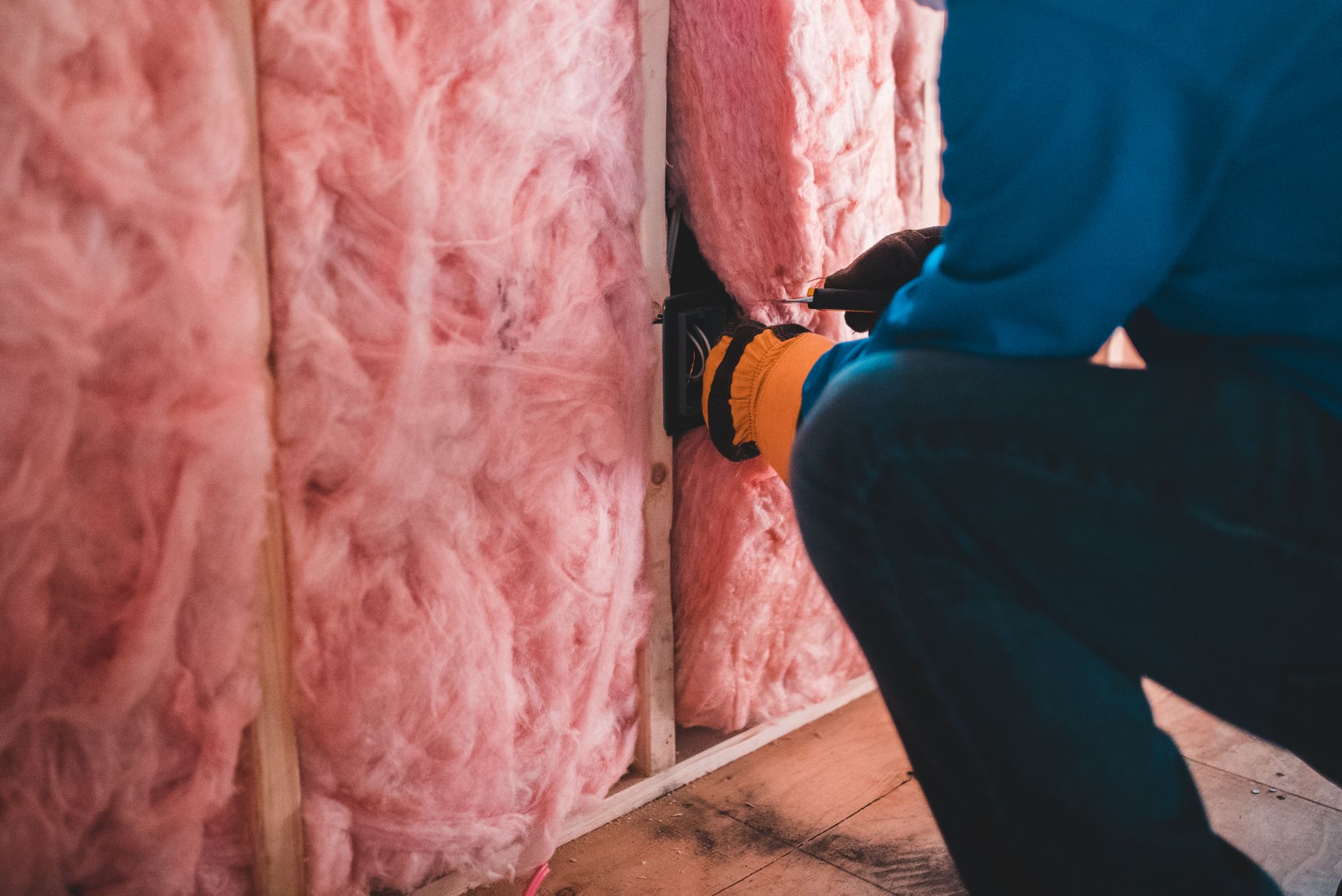
Insulation is often thought of as a thermal product, but its acoustic properties make it an essential component of any serious soundproofing project. Choosing the right insulation can dramatically improve the performance of walls, ceilings, and floors.
How Insulation Reduces Noise
Insulation in a wall or ceiling cavity does not by itself block sound transmission. Its primary acoustic function is to absorb sound energy within the cavity, preventing it from resonating between the two wall surfaces. An empty stud cavity acts like a drum — it amplifies sound. A cavity filled with insulation damps that resonance significantly.
For best results, insulation works alongside mass and decoupling. Insulation alone in a standard wall adds roughly 3 to 5 STC points. Combined with proper mass and decoupled framing, the same insulation contributes to a total system improvement of 15 to 25 STC points.
Mineral Wool — The Best Acoustic Choice
Mineral wool, sold under brands like Rockwool Safe’n’Sound and Roxul, is the top choice for acoustic applications. It is denser than fiberglass batts, which means it absorbs sound across a wider frequency range. It is also non-combustible, dimensionally stable, and does not absorb moisture.
Rockwool Safe’n’Sound is specifically formulated for acoustic use in interior walls and ceilings. It is the material of choice for most serious soundproofing projects. Cost is higher than fiberglass — roughly $0.60 to $0.80 per square foot versus $0.30 to $0.40 for fiberglass — but the acoustic performance difference justifies the premium for shared walls and ceilings.
Fiberglass Batts — Adequate, Not Optimal
Standard fiberglass insulation batts are widely available and cheap. They provide acoustic benefit in wall cavities and are far better than leaving cavities empty. For walls that already have standard fiberglass insulation, the acoustic improvement from switching to mineral wool alone is real but not transformative — 2 to 4 additional STC points typically.
Spray Foam — Good Thermal, Limited Acoustic
Spray foam seals air gaps effectively but is rigid and does not absorb sound energy well. Its acoustic contribution comes primarily from sealing penetrations — gaps where pipes, wires, and other services pass through walls — rather than from sound absorption. For acoustic purposes, use mineral wool in cavities and spray foam only to seal penetrations and gaps.
Blown-In Cellulose
Cellulose is a recycled paper product blown into wall cavities. Its acoustic performance is comparable to fiberglass batts and better than nothing. It is sometimes used in existing walls where opening the drywall is not practical — small holes can be drilled, cellulose blown in, and the holes patched. This is a practical approach for improving existing walls without full renovation.
Key Takeaway
For any new wall or ceiling assembly, use mineral wool insulation as a baseline. For existing walls you cannot open, blown-in cellulose through small access holes is a practical improvement. In either case, insulation is one component of a complete assembly — it performs best alongside proper mass and decoupling.